 Period Calculator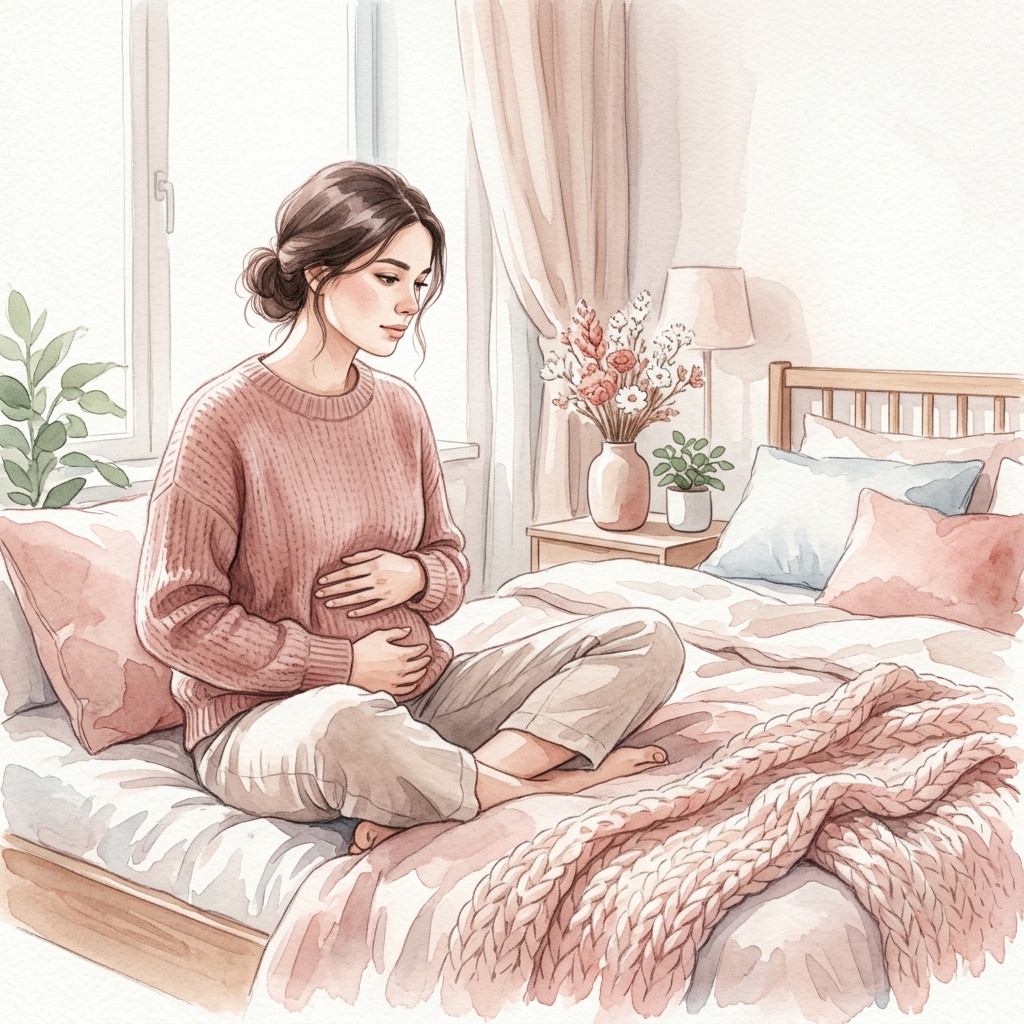
Abdominal cramping during early pregnancy is extremely common. In fact, for many women, it is one of the first signs of pregnancy — not a period. The cause of the cramping is entirely different from menstrual cramps, but the sensation can be remarkably similar. Here's everything you need to know to interpret what your body is telling you.
Why Cramping Happens in Early Pregnancy
Implantation Cramping
When the fertilized egg embeds into the uterine lining — typically 6–12 days after conception — the process causes mild uterine contractions. These implantation cramps are often described as a dull ache or light prickling sensation in the lower abdomen or back. They are typically milder than menstrual cramps, shorter in duration, and often accompanied by light spotting. Importantly, they occur right around the time a period would be expected, which creates significant confusion.
Uterine Expansion
Even in the earliest weeks of pregnancy, the uterus begins to grow and adapt to accommodate the developing embryo. This expansion can cause mild to moderate cramping as the smooth uterine muscle stretches. This is a completely normal and expected part of pregnancy, though it can feel disturbingly similar to the beginning of a period.
Round Ligament Development
The round ligaments support the uterus on either side. As the uterus begins to grow in early pregnancy, these ligaments stretch and can cause sharp, stabbing pains or a dull ache on one or both sides of the lower abdomen. This is more commonly noticed in the second trimester but can begin very early in some women.
Increased Blood Flow to the Pelvis
Pregnancy dramatically increases blood flow to the pelvic region and uterus. This vascular engorgement can create a sense of heaviness, fullness, and mild aching that closely mimics the congested feeling many women associate with the start of their period.
Digestive Changes
Elevated progesterone in early pregnancy slows gastrointestinal motility. This causes gas, bloating, and constipation — all of which produce lower abdominal cramping that can be confused with period pain. This digestive discomfort is often an underappreciated source of "period-like" cramping in the first trimester.
Menstrual Cramps vs. Early Pregnancy Cramps: How to Tell Them Apart
While the two can feel very similar, there are subtle but meaningful differences:
- Timing relative to bleeding: Period cramps typically begin 1–2 days before flow starts and resolve as bleeding progresses. Pregnancy cramps often occur without accompanying heavy flow, or only with very light spotting.
- Character of pain: Period cramps are often rhythmic, wave-like contractions driven by prostaglandins. Implantation cramps tend to feel more diffuse, dull, and constant rather than pulsing.
- Location: Period cramps often radiate to the lower back and thighs. Early pregnancy cramps tend to be more centralized in the lower abdomen, though round ligament pain can be felt on one side.
- Associated symptoms: True period cramps are followed by escalating bleeding. Pregnancy cramping comes with early pregnancy symptoms — fatigue, nausea, breast changes — rather than a full period.
Warning Signs: When Cramping Needs Urgent Attention
Not all early pregnancy cramping is benign. Seek immediate medical care if you experience:
- Severe, one-sided pelvic pain that may indicate ectopic pregnancy
- Heavy bleeding coinciding with intense cramping (possible miscarriage)
- Shoulder tip pain alongside pelvic pain (internal bleeding from ruptured ectopic)
- Fever combined with pelvic pain (possible infection)
- Pain so severe it prevents you from functioning normally
An ectopic pregnancy — where the embryo implants in the fallopian tube rather than the uterus — causes cramping and sometimes bleeding, but the pregnancy cannot survive and poses serious danger to the mother. Severe one-sided pain with a positive pregnancy test is a medical emergency. Do not wait for an appointment — go to the emergency room.
What to Do If You Have Cramps and Suspect Pregnancy
Take a home pregnancy test. If you are in the late luteal phase of your cycle and experiencing cramping that feels different from your usual period pain — especially if accompanied by breast tenderness, fatigue, or nausea — testing is the logical and important next step. Modern tests are sensitive enough to detect pregnancy before a missed period in many cases.
Know When Your Period Is Due
Knowing your exact expected period date gives you a clear reference point for interpreting cramping and determining when to test. Try our free Period Calculator.
Calculate My Period →The Takeaway
Yes — you can absolutely experience period-like pain and still be pregnant. Early pregnancy produces real cramping through implantation, uterine expansion, digestive changes, and increased pelvic blood flow. The key is paying attention to the character of the cramping, the absence of a heavy period following the pain, and any accompanying pregnancy symptoms. When in doubt, test — and if cramping is severe or one-sided, seek urgent care.