 Period Calculator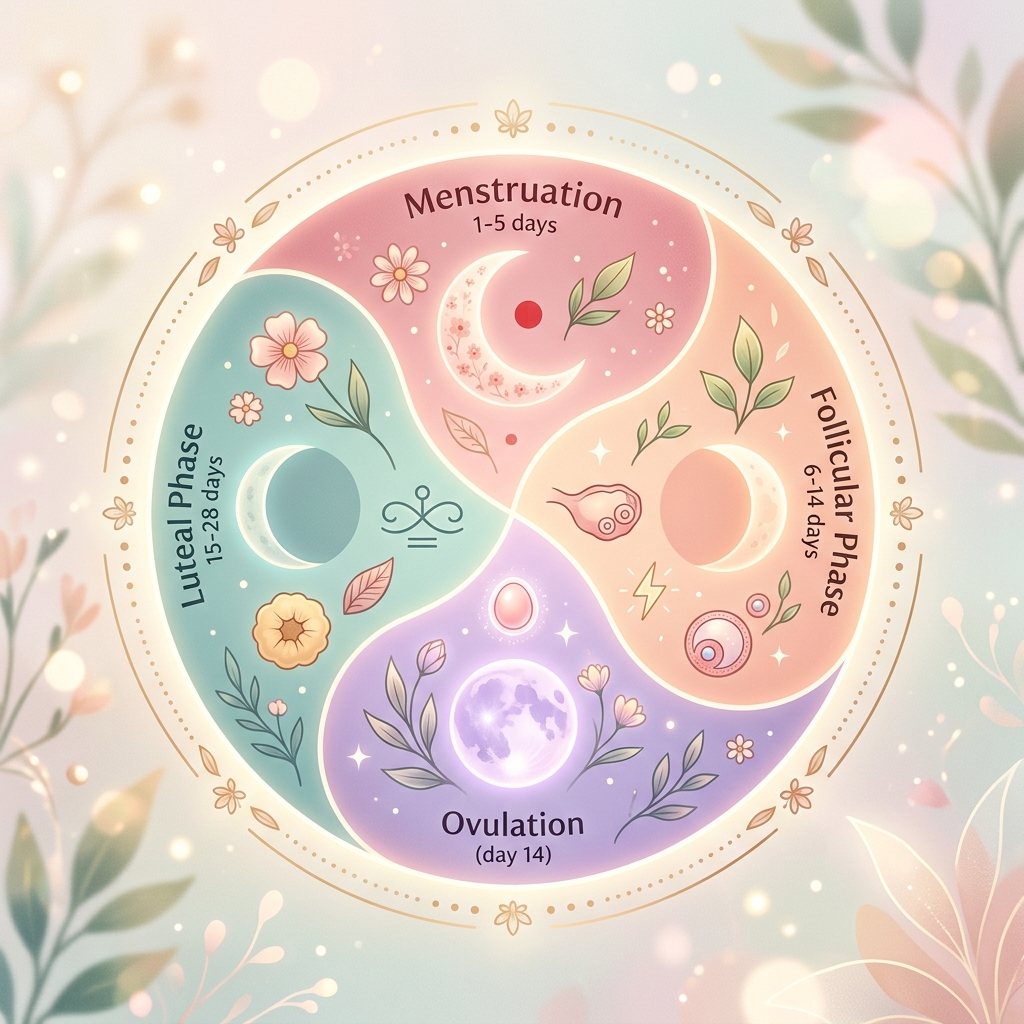
Despite being a monthly experience for nearly half of the world's population across several decades of life, the menstrual cycle remains widely misunderstood — even by those who have it. Most women are taught about the period itself but little about the extraordinary hormonal journey that surrounds it. Understanding your cycle is one of the most empowering things you can do for your health.
🔍 Key Facts About the Menstrual Cycle
- A normal cycle is 21–35 days; the "28-day average" is just that — an average
- The cycle has four distinct phases driven by four key hormones
- Only the luteal phase (after ovulation) is relatively fixed at ~14 days
- Tracking your cycle reveals patterns that affect energy, skin, mood and more
What Is the Menstrual Cycle?
The menstrual cycle is a recurring hormonal process that begins on Day 1 of your period and ends the day before your next period. Its primary biological purpose is to prepare the body for potential pregnancy each month — but its effects extend far beyond reproduction, influencing nearly every system in the body.
The cycle is regulated by four key hormones produced by the brain and ovaries: FSH (follicle-stimulating hormone), LH (luteinizing hormone), estrogen, and progesterone. These hormones rise and fall in a coordinated sequence that drives the four phases of the cycle.
The Four Phases of the Menstrual Cycle
🔴 Phase 1: Menstrual Phase (Days 1–5)
Your period begins. The uterine lining (endometrium) sheds because no pregnancy occurred in the previous cycle. Estrogen and progesterone are at their lowest. Prostaglandins trigger uterine contractions, which may cause cramps. The average blood loss per period is 30–80 ml.
🌸 Phase 2: Follicular Phase (Days 1–13)
Overlapping with menstruation, FSH stimulates 5–20 follicles in the ovaries to begin maturing, each containing an egg. One dominant follicle emerges and produces increasing amounts of estrogen, which thickens the uterine lining and gradually improves energy, mood, and libido throughout this phase.
🥚 Phase 3: Ovulation (Day ~14)
An LH surge triggers the dominant follicle to rupture and release a mature egg into the fallopian tube. This is your single most fertile moment. The egg survives 12–24 hours; sperm can survive 3–5 days, creating a fertile window of approximately 6 days. Some women feel mild one-sided pelvic pain (mittelschmerz) at ovulation.
🌙 Phase 4: Luteal Phase (Days 15–28)
The ruptured follicle becomes the corpus luteum, producing progesterone to maintain the uterine lining for potential implantation. If no pregnancy occurs, the corpus luteum breaks down, progesterone drops, and menstruation begins again. PMS symptoms — bloating, mood changes, breast tenderness — occur in this phase.
What Hormones Drive Your Cycle?
Understanding which hormone does what helps you predict how you'll feel throughout the month:
- Estrogen (rises in follicular phase): Boosts energy, improves skin clarity, elevates mood, increases cognitive sharpness and libido. Its peak just before ovulation is when many women feel their best.
- Progesterone (rises in luteal phase): Has a calming, sedating effect. Increases body temperature, can cause bloating and breast tenderness. Supports the uterine lining for implantation.
- FSH: Stimulates egg development; high at the start of the follicular phase, falls as estrogen rises.
- LH: Surges dramatically at ovulation; it's what OPK tests detect.
Many women find it helpful to align activities with their cycle phase — high-intensity workouts and social events in the follicular/ovulation phase; quieter, restorative activities in the luteal phase. This practice is called cycle syncing and has growing evidence behind it for improving energy and wellbeing.
What Does a Healthy Period Look Like?
A healthy period typically: lasts 3–7 days, involves moderate flow (neither soaking a pad every hour nor barely spotting), is bright to dark red in color, and may include small clots on heavy days. Significant deviation from this — very heavy bleeding, periods lasting more than 7 days, or frequent large clots — warrants medical attention.
How to Track Your Cycle Effectively
Modern cycle tracking goes beyond marking your period dates. For the richest understanding of your cycle, track:
- Period start and end dates (to determine cycle and period length)
- Flow intensity (light, medium, heavy) each day
- Cervical mucus consistency (dry, sticky, creamy, stretchy)
- Basal body temperature (daily, before getting out of bed)
- Mood, energy, and physical symptoms
After 3–6 cycles of consistent tracking, clear patterns emerge that allow you to predict ovulation, your fertile window, and your next period with remarkable accuracy.
Start Tracking Your Cycle Today
Use our free Period Calculator and Cycle Length Tracker to understand your unique cycle patterns.
Explore All Cycle Tools →Cycle Changes at Different Life Stages
Your cycle naturally evolves across your lifetime. Cycles tend to be irregular in the first few years after puberty as hormones establish their rhythm. In the 20s and early 30s, most women have their most regular cycles. In the late 30s and 40s, cycles often begin to shorten then lengthen as ovarian reserve declines, leading to perimenopause. Understanding these changes as normal can reduce unnecessary anxiety.