 Period Calculator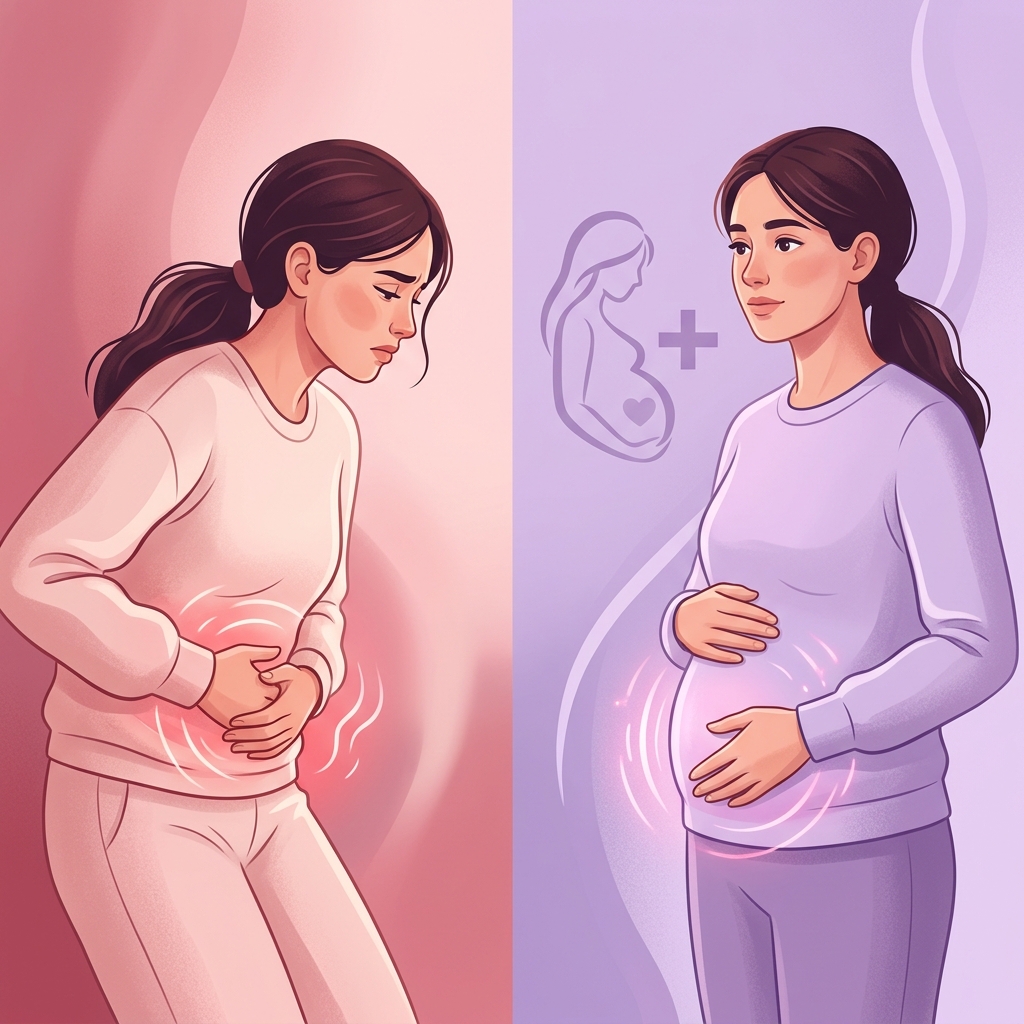
The two-week wait after ovulation is one of the most anxiety-inducing times for women trying to conceive or trying not to conceive. Any twinge, ache, or cramp gets analyzed intensely. The challenge is that the early symptoms of pregnancy and an approaching period can be remarkably similar — because they're driven by some of the same hormonal shifts.
Here's a detailed breakdown of the differences to help you distinguish between the two.
🔍 Quick Reference
- Implantation cramps occur 6–12 days after ovulation; period cramps begin 1–2 days before bleeding
- Pregnancy cramps are typically milder and felt lower in the pelvis
- Implantation bleeding is much lighter than a period and lasts only 1–3 days
- A missed period followed by a positive pregnancy test is the only reliable confirmation
What Causes Each Type of Cramp?
Period Cramps (Menstrual Cramps)
Period cramps are caused by prostaglandins — hormone-like substances that trigger the uterine muscle to contract and expel the uterine lining. They typically start 1–2 days before bleeding begins and peak in the first 24–48 hours of the period. The pain is often described as a dull, heavy ache or sharp waves of pain in the lower abdomen, sometimes radiating to the lower back and inner thighs.
Early Pregnancy Cramps (Implantation Cramps)
When a fertilized egg implants into the uterine lining (approximately 6–12 days after ovulation), some women experience mild cramping known as implantation cramps. These are caused by the uterus stretching and adjusting to accommodate the embryo, as well as increased blood flow to the uterus driven by rising hCG (human chorionic gonadotropin) hormone levels.
Side-by-Side Comparison
| Feature | Period Cramps | Pregnancy Cramps |
|---|---|---|
| Timing | 1–2 days before period; during first 2 days of bleeding | 6–12 days after ovulation (before expected period) |
| Intensity | Mild to severe; often increases over hours | Usually mild; brief twinges or dull ache |
| Location | Lower abdomen, may radiate to back and thighs | Usually lower pelvis; may feel one-sided |
| Duration | 1–3 days, coincides with heavy bleeding | Hours to 1–2 days; does not intensify |
| Bleeding | Heavy red or dark red flow | Light pink or brown spotting (or none) |
| Other signs | Bloating, mood swings, fatigue before period | Breast tenderness, nausea, heightened smell sense |
No symptom alone can confirm pregnancy. The only reliable confirmation is a positive pregnancy test taken at least 14 days after ovulation, or a blood hCG test ordered by a doctor. The symptoms above are guides, not diagnoses.
Implantation Bleeding vs Period: How to Tell
One of the most telling differences is the nature of any bleeding that occurs:
- Implantation bleeding is very light — often just a few spots of pink or brown discharge. It lasts 1–3 days and never becomes a heavy flow. It has no clots.
- Period bleeding starts light but increases over hours to a moderate or heavy flow. It typically lasts 3–7 days, may contain clots, and turns bright red.
If you notice very light spotting about a week before your period is due, followed by no period, this pattern is more consistent with implantation than menstruation.
Signs That Point Strongly to Pregnancy
Beyond cramping, early pregnancy tends to produce a constellation of other hormonal changes:
- Sudden, heightened sensitivity to smells
- Breast heaviness and tenderness that feels different from typical PMS
- Unusual fatigue that begins before a missed period
- Frequent urination beginning in the first weeks
- A missed period — the single most reliable early indicator
Signs That Point Strongly to an Approaching Period
- Cramps that worsen progressively over one to two days
- Bloating, water retention, mood swings in the days before
- Cramping followed by the start of moderate to heavy bleeding
- Symptoms that resolve completely once your period begins
Track Your Cycle Precisely
Use our Period Calculator to predict your next period date and understand your cycle timing — so you're never guessing.
Use the Period Calculator →When to Take a Pregnancy Test
For the most accurate result, wait until the first day of a missed period — or ideally, one week after. Testing too early can produce a false negative because hCG levels may not yet be high enough to detect. Early-response tests marketed as detecting pregnancy "5 days before a missed period" are less reliable than testing on the day of a missed period.
If your period is late and you're experiencing ongoing cramping, nausea, breast changes, and fatigue, take a home pregnancy test. If the result is positive, schedule an appointment with your healthcare provider for confirmation and prenatal care.